
Why Study Nursing?
Want to become a Registered Nurse (RN) or a Licensed Practical Nurse (LPN)? Pursuing a nursing degree at Forsyth Tech prepares you for a rewarding career in healthcare. Forsyth Tech offers three accredited nursing degrees to fit your schedule and budget: Associate Degree Nursing (ADN), Practical Nursing (LPN) and Advanced Placement (LPN-ADN transition). Our comprehensive degrees are taught in state-of-the-art facilities by experienced professors who combine theoretical knowledge and hands-on clinical experience to launch your healthcare career.
Not sure how to choose? Graduates of the the two-year Associate Degree in Nursing (ADN) are well-prepared to pass the National Council Licensure Examination for Registered Nurses (NCLEX-RN) exam which is necessary for RN licensure and can transfer to a Bachelor of Nursing (BSN) program at a four-year university. Our one-year Practical Nursing degree is a fast track to becoming a Licensed Professional Nurse (LPN) and prepares you to take the National Council Licensure Examination for Practical Nurses (NCLEX-PN). Already have your LPN? The one-year Advanced Placement (LPN-ADN transition) bridge program allows you to use your LPN to earn an ADN.
Don’t wait to embark on a fulfilling nursing career!
See our Minimum Admission Requirements here.
Choosing between an Associate Degree in Nursing (ADN) and a Bachelor of Science in Nursing (BSN)
While both tracks allow you to sit for the National Council Licensure Examination (NCLEX-RN) exam and become a Registered Nurse (RN), they differ significantly in terms of time, cost and long-term career trajectory.
Many nurses start with an ADN because it is cheaper and since you can begin working as an RN after only two years, you will start earning money sooner. A BSN has higher education and practice requirements, but graduates usually earn more and have greater responsibility throughout their careers. A BSN also prepares you for a more advanced degree, including a Master of Science in Nursing (MSN) or a Nurse Practitioner (NP) degree.
Key Differences
ADN: Focuses heavily on the fundamentals of nursing. The goal is to get you ready for clinical as quickly as possible. You will spend most of your time on direct patient care, pharmacology and medical-surgical nursing.
BSN: Covers everything in the ADN curriculum but adds “big picture” coursework. This includes nursing research, leadership, public health and informatics. It prepares you to understand the why behind healthcare systems, not just the how of bedside care.
If you to be in a leadership position, specialize or continue your education at the graduate level, a BSN is usually the minimum requirement.
-
Leadership: Most management or “Charge Nurse” roles require a BSN.
-
Specialization: Highly competitive units (like the ICU, NICU or ER) often prioritize BSN applicants.
-
Graduate School: To become a Nurse Practitioner (NP), Nurse Anesthetist (CRNA) or Educator, you must have a BSN before entering a Master’s or Doctoral program.
The industry is shifting. Many hospitals—especially those with Magnet Status (a prestigious designation for nursing excellence)—now require their nurses to hold a BSN.
-
In some states (like New York), there are “BSN in 10” laws, which require ADN-prepared nurses to earn their BSN within 10 years of initial licensure to maintain their registration.
Choose an ADN if… > You need to enter the workforce quickly, want to minimize student debt or plan to have an employer pay for your “RN-to-BSN” bridge program later.
Choose a BSN if… > You want to go into specialized nursing, have aspirations for leadership or advanced practice, or want to ensure you are eligible for employment at top-tier hospitals right away.
Degrees & Certificates
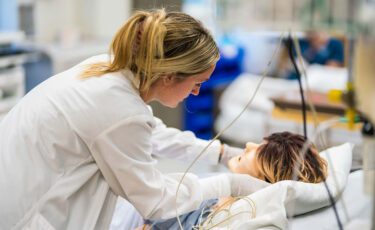
Associate Degree Nursing – Advanced Placement (LPN-ADN transition)
Associate Degree in Applied Science
Time to Complete:
One year
Schedule:
Day
The LPN-ADN transition track offers LPNs an opportunity to earn an associate degree in nursing, preparing them to take the NCLEX-RN. The program focuses on integrating safety, quality, and individualized care in a dynamic healthcare environment. Graduates have diverse employment opportunities in various healthcare settings.
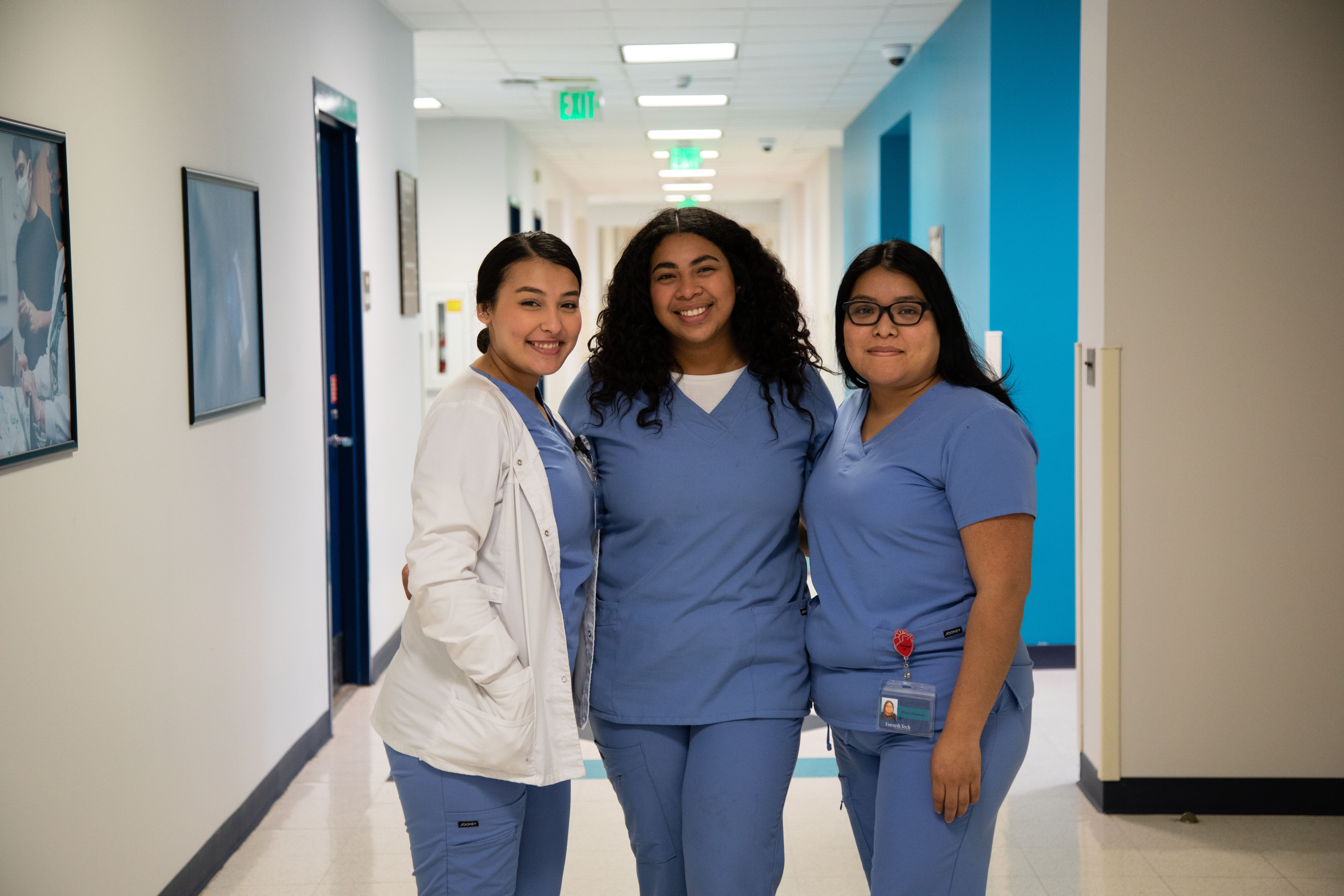
Associate Degree Nursing
Associate Degree in Nursing
Time to Complete:
Two years
Schedule:
Day classes
Studying nursing at Forsyth Tech prepares students for a rewarding healthcare career. With comprehensive theoretical knowledge, practical skills and experienced faculty, students gain the competencies needed to provide quality care and make a positive impact in the field of nursing.
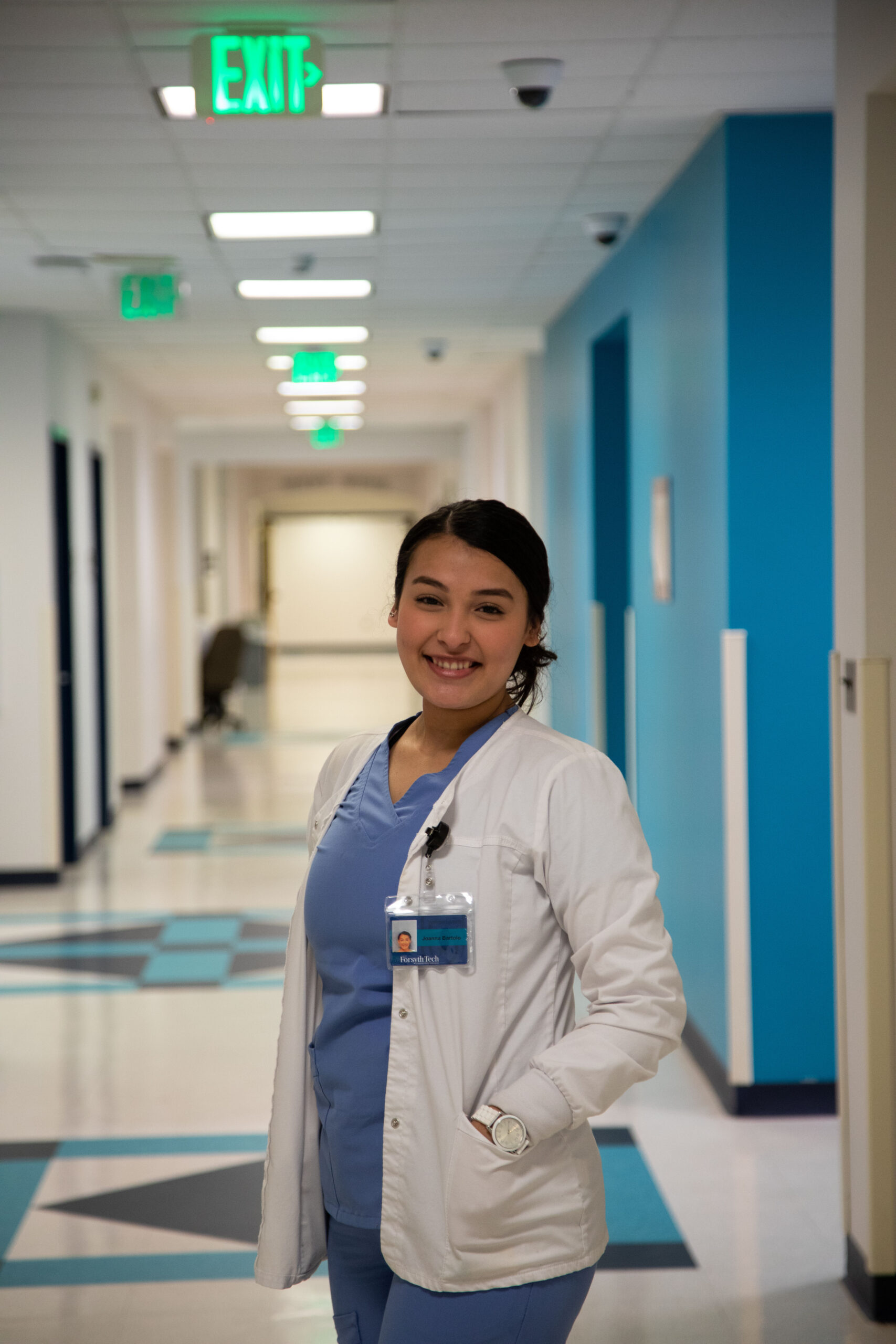
Practical Nursing
Diploma
Time to Complete:
One year
Schedule:
Day, evening and weekend classes
Earn your diploma in Practical Nursing at Forsyth Tech to gain the knowledge and skills needed to provide safe and quality nursing care. Prepare for a rewarding career in healthcare with hands-on training and eligibility for licensure as a Licensed Practical Nurse.
Career Tracks
- Nurse
- Clinical Research Associate
- Patient Coordinator
- Specialized Nursing
- Care Coordinator
ADN salary vs BSN salary
| Degree Level | Average Annual Salary | Hourly Wage (Avg) |
|---|---|---|
| ADN (Associate) | $80,000 – $82,000 | ~$38.50 - $40.00 |
| BSN (Bachelor's) | $88,000 – $96,000 | ~$42.00 - $46.00 |
$37/hr
Average Salary Range
10.3 %
Job growth
576
Job openings
Is it better to pursue an Associate Degree in Nursing (ADN) or a Bachelor of Science in Nursing (BSN) for a long-term nursing career?
For a long-term nursing career, a Bachelor of Science in Nursing (BSN) is objectively the better choice. While an Associate Degree in Nursing (ADN) is an excellent “entry-point,” the BSN is increasingly becoming the industry standard for stability, salary and professional mobility.
Many nurses start with an ADN because it allows you to become a Registered Nurse (RN) after two years, costs less and you start earning money sooner. A BSN has more education and practice requirements, but graduates usually earn more and have greater responsibility. A BSN also prepares you for a more advanced degree, including a Master of Science in Nursing (MSN) or a Nurse Practitioner (NP) degree.
Some hospitals will hire you with an ADN and then pay for your BSN through an “RN-to-BSN” bridge program. This is the most cost-effective way to get a higher degree.
The Strategic “ADN-First” Route
Despite the long-term benefits of a BSN, many nurses start with an ADN for financial reasons.
Lower Initial Cost: You pay community college tuition instead of university rates.
Start Working Sooner: You enter the workforce in two years instead of four.
Employer-Paid Tuition: Many hospitals will hire you with an ADN and then pay for your BSN through an “RN-to-BSN” bridge program. This is the most cost-effective way to get the higher degree.

Get the education you deserve without spending your days worrying about how to afford it. Our financial aid team can help you chart a path to paying for college, including through debt-free grants and scholarships.

The Forsyth Tech Cares program supports students so they can succeed, including access to financial assistance, health services and confidential counseling.
Accreditation and Program Info
The Forsyth Tech Community College Nursing Program is accredited by the National League for Nursing Commission for Nursing Education Accreditation (NLN CNEA) located at 2600 Virginia Avenue, NW, Washington, DC 20037, 202-909-2526.
The Associate Degree Nursing (ADN) program supports the mission of the North Carolina Community College System and the Health Technologies Division. The faculty is committed to providing accessible high quality nursing education to meet the diverse and changing health-care needs of the service area and to promoting the development of qualified students prepared for the professional role of registered nurse at the entry level.
Graduates of this program are prepared for entry into the nursing profession and meet the education requirements to take the national Council Licensure Examination (NCLEX-RN). The philosophy of the ADN program is based on faculty beliefs related to individuals, the health care system, nursing, the environment, health, quality of life and achievement of potential.
Within this mission the goal of the nursing faculty is to promote the highest quality of nursing care to individuals, families and the community. The aim of this program is to facilitate optimum health, quality of life and achievement of potential for the individual.
Upon completion of the Associate Degree Nursing (ADN) Program and licensure, the graduate will:
- Practice professional nursing behaviors incorporating personal responsibility and accountability for continued competence.
- Communicate professionally and effectively with individuals, significant support persons and members of the interdisciplinary healthcare team.
- Integrate knowledge of the holistic needs of the individual to provide an individual centered assessment.
- Incorporate informatics to formulate evidence-based clinical judgments and management decisions.
- Implement caring interventions incorporating documented best practices for individuals in diverse settings.
- Develop a teaching plan for individuals, and/or the nursing team, incorporating teaching and learning principles.
- Collaborate with the interdisciplinary healthcare team to advocate for positive individual and organizational outcomes.
- Manage healthcare for the individual using cost effective nursing strategies, quality improvement processes and current technologies.
Graduates of this program are eligible to apply to take the National Council Licensure Examination or (NCLEX-RN) which is required for practice as a Registered Nurse (RN). The employment opportunities for graduates of the Associate Degree Nursing (ADN) program are diverse. Examples of employment settings include: medical clinics, physician offices, long term care facilities, occupational health settings and community agencies.
Click the link to view the Nursing Student Handbook
Student Handbook
“I chose to attend Forsyth Tech because of its excellent, challenging nursing program and its preference among nurse employers. I am also pleased that it has such a high NCLEX pass rate.”
Zoriee S.
Visit us today!
Forsyth Tech is located at:
2100 Silas Creek Parkway,
Winston-Salem, NC 27103
FAQ
Welcome to our FAQ page! You can find information about our nursing programs here. If you can’t find an answer to your question here, please reach out to our Information Desk at 336.723.0371. We’ll direct you to someone who can help.
Jump to the topic of your choice below:
It takes two years to complete an Associate Degree in Nursing (ADN).
It takes one year to complete a Practical Nursing degree.
It takes one year to complete an Advanced Placement (LPN-RN) bridge program.
Graduates of the Associate Degree in Nursing (ADN) can take the National Council Licensure Examination for Registered Nurses (NCLEX-RN) exam which is necessary for RN licensure.
Graduate of the Practical Nursing degree can take the National Council Licensure Examination for Practical Nurses (NCLEX-PN) exam which is necessary for LPN licensure.
Graduates of the Advanced Placement (LPN-ADN transition) bridge program can take the National Council Licensure Examination for Registered Nurses (NCLEX-RN) exam which is necessary for RN licensure.
The Forsyth Tech Community College Nursing Program is accredited by the National League for Nursing Commission for Nursing Education Accreditation (NLN CNEA) located at 2600 Virginia Avenue, NW, Washington, DC 20037, 202-909-2526
Follow these links for admission requirements and pre-requisites:
Associate Degree in Nursing (ADN)
Practical Nursing (LPN)
Advanced Placement (LPN-RN Transition)